
Face Milling Inserts
Face Mills is the most common milling operation and can be performed using a wide range of different tools. CNC milling inserts with a 45º entering angle are most frequently used, but round milling inserts and square shoulder milling inserts are also used for certain conditions. Face milling inserts are mainly used for machining planes, with the characteristics of high production efficiency and good work stability.
Description
Face milling is a machining technique used for flattening and smoothing the surface of workpieces. Machinists use two types of machines for this process which could be either a machining center or a milling machine. The major difference between this process and traditional milling techniques is that the milling machine or machining center is perpendicular to the workpiece. This means the top of the machine mills the workpiece instead of the side used in other milling techniques.
The demand for a wide, flat, smooth surface and the purpose to eliminate an undesirable layer of material of a workpiece leads to face milling development. UKO can offer a series of face milling inserts, which can process a variety of workpieces like steel, stainless steel, titanium alloy, cast iron, etc. UKO face milling inserts including SEKT/SEER/SEKN/SEEN/SPKN/SEMR and etc. Those cutting tools can remove the material from the face or the edges of the stock to enable you to get the final result being a smooth and flat surface workpiece.
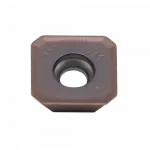
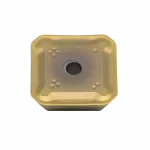
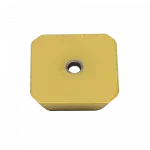
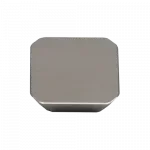
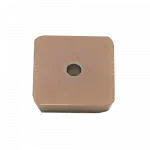
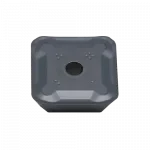

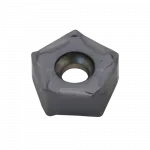
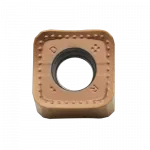
Features:
- Available to different entering angles.
- High efficiency and smooth finishing surface.
- Flexibility to perform different facing operations.

Why choose us?
- 100% tungsten carbide raw material.
- Good wear and abrasive resistance.
- Precision ground and polished for aluminum using milling inserts.
- Better cost-effective CNC tools.
- R&D and production ability to keep up with market trends.
- Technical support ability to solve processing solutions for customers in all aspects.
- Adequate stock to ensure fast delivery.
FAQ
Since there are multiple options to combine particular tools and face milling operations, you may need some explanations on how to choose one. Here are some factors to pay attention to while making a decision:
Workload: Some types of face milling operations, like finishing with wiper inserts, suit the manufacturing of large batches of products better. It is correct only when the milling operations go with a combination of proper cutters. General face milling is an ideal option for mixes of small batches of components.
Your particular intent: For example, to remove large amounts of material rapidly and roughly or achieve the highest precision possible. Guide your choice accordingly.
Type of workpieces: In case you ordered castings, be prepared to apply for heavy-duty milling first. But if you have already prepared components, you can go with bare general face milling.
Design of a workpiece: It is highly inadvisable to mill over pre-drilled holes, for example. But the consistency of high feed machining consistency over the surface will severely deteriorate if applied to such a component. Heavy duty and general face milling are less demanding in this aspect.
Design of a finished component and technical requirements: It is frequent that you cannot achieve high precision by using, for example, heavy-duty or high feed milling. So be sure the chosen method meets the requirements set to the finished component’s design. Also, thin-walled components can be produced only by means of general face milling or finishing with wiper inserts (ineffective).
Material of a workpiece: Consider that high feed milling can be performed over the thick sheets of the durable metals by appropriate tooling. So, if you are unsure that a workpiece will withstand increased temperature and pressure, better go with general milling or finishing with wiper inserts.
You can make the decision regarding the choice of a face milling process alone. But do not forget to select an appropriate cutter with a sufficient entering angle as well as per their characteristics above.
APMT1135 and APMT1604 milling inserts is belong to shoulder milling inserts, which can be used for shoulder milling, face milling.
| Material | Processing mode | Cutting speed / (m/min) | Feed rate / (mm/r) | Back cutting amount/mm |
| Silicon aluminum alloy (w (Si)<13%) | Milling | 500-3000 | 0.10-0.30mm/tooth | 0.10-3.0 |
| Silicon aluminum alloy (w (Si)>13%) | Milling | 200-1500 | 0.10-0.30mm/tooth | 0.10-3.0 |
APMT1135 is generally used for cast aluminum and deformed aluminum.
The cutting parameters of cast aluminum are generally selected according to the content of silicon.
Deformed aluminum alloy has high plasticity and low hardness. The small elastic modulus makes the contact flow and bonding between chips and tools in cutting. The basic requirements for tools are: sharp cutting edge, small blunt circle radius, large positive rake angle, large rear angle and small tool surface roughness.
PCD knife has smooth surface, small friction coefficient with various materials, small affinity with aluminum, difficult to bond and react chemically, and small diamond particle size is selected. It can grind a sharp edge.
PCD cutting edge rake angle R ≥ 0-10 а 0 ≥ 7-20 common edge geometric parameters of tool tip, tool tip rake angle R0 = 0, 10 tool tip rake angle а 0=7、11、20。 Tool tip arc radius r ω= 0.05mm、0.1mm、0.2mm、0.4mm、0.8mm、1.2mm。
“Face milling cutter”, also known as disk milling cutter, is used to process plane on vertical milling machine, end milling machine or gantry milling machine. There are cutter teeth on the end face and circumference, as well as coarse teeth and fine teeth. There are three types of structures: integral type, inlaid type and indexable type.
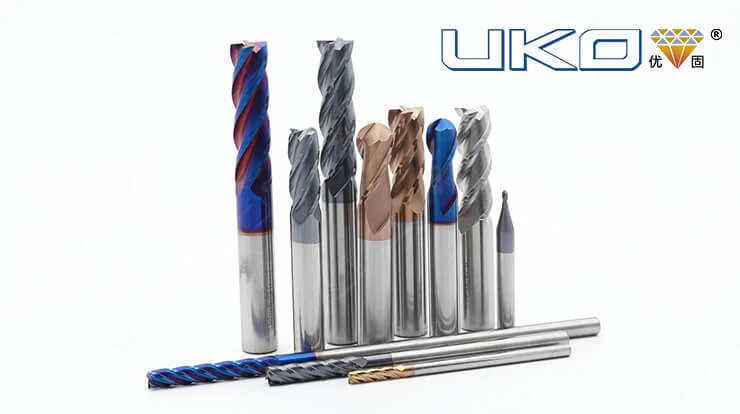
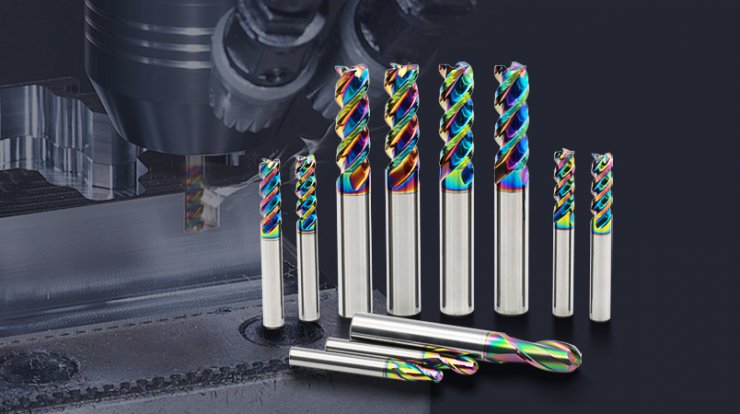
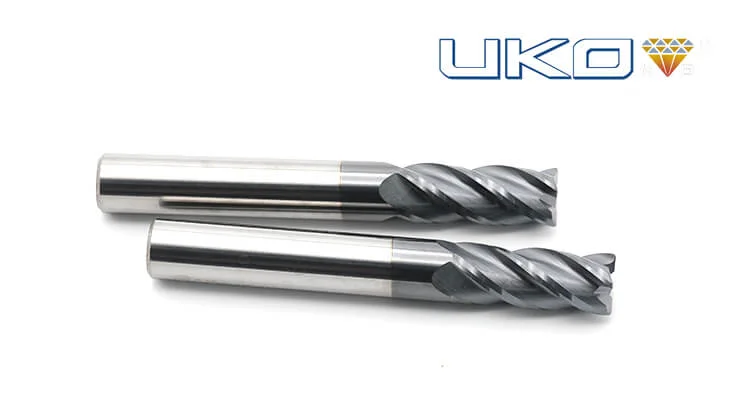
“End milling cutter” is mainly used to process grooves and step surfaces. The cutter teeth are on the circumference and end face, and cannot be fed along the axial direction during operation. When the end milling cutter has end teeth passing through the center, it can be fed axially. This is the difference between the two.
The end mill has a large edge-to-diameter ratio, it can process a deeper cavity, the cutting parameters are low, and the tool is easy to vibrate.
The face milling cutter has a small edge-to-diameter ratio and is used to process large surfaces of workpiece. It has high parameters and good tool rigidity, which is not easy to vibrate.
Latest blog