
Carbide Rods
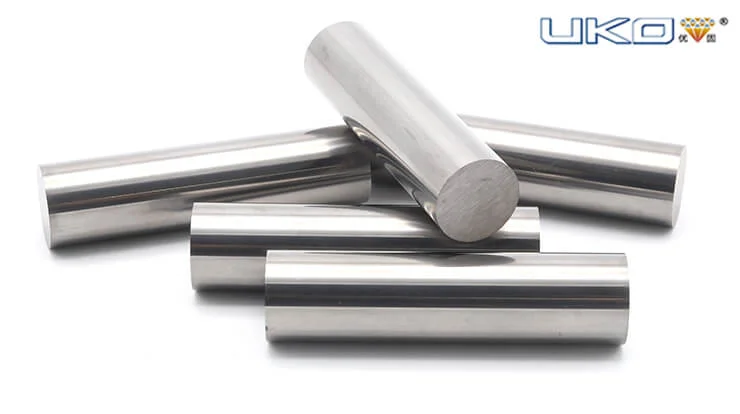
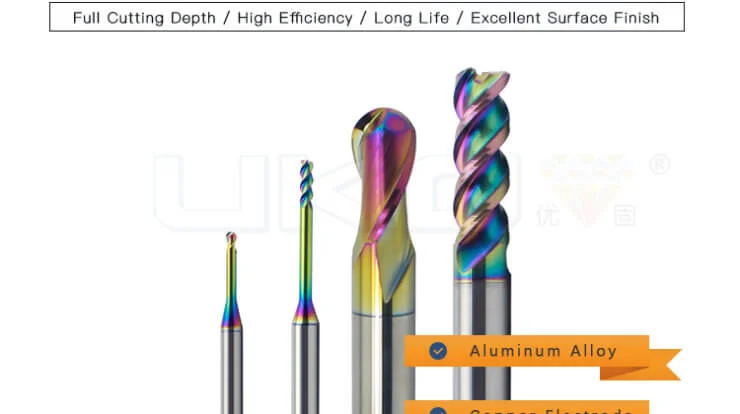
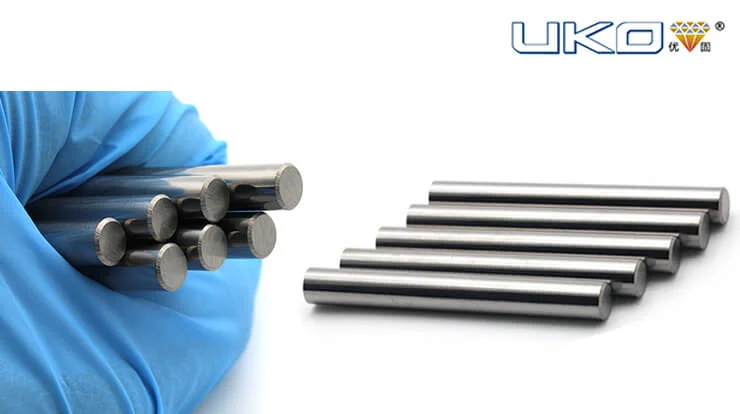
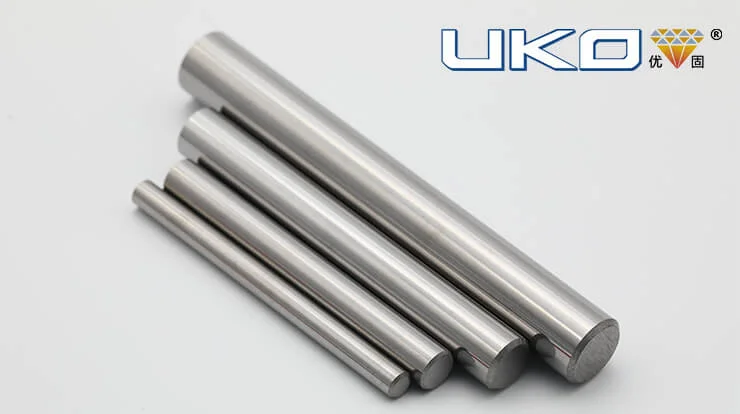
Carbide rods are made of premium cemented carbide with high performance to withstand thermal extremes, vibration, and impact wear, round bar shape, also known as rotary tool blanks and cutting tool blanks. These tungsten carbide rods could provide consistency in critical applications and are available in a wide range of finishes and grades. It can be used for tooling applications such as end mills, drills, taps, reamers, countersinks, engraving tools, routers, and other rotary tools.
UKO has a complete line of carbide rods in a wide selection of tungsten carbide grades with binders ranging from 6% to 15%, and grain sizes to suit your application. We offer a wide range of tungsten carbide rods, including solid carbide rods (unground rod blanks, ground and polished rods with or without chamfers), rods with coolant holes (central, two straight coolant holes, two helical holes 30°).
Main types of our carbide rods


Grade Information of carbide rods
| Grade | Grain size | Cobalt content | Density | Hardness | TRS | KIc | Applications |
| (um) | (%) | (g/cm3) | (HRA) | (N/mm²) | (MPa.m1/2) | ||
| UKU20 | 0.7 | 10 | 14.45 | 91.8 | 3800 | 10.5 | Sub-fine grain size, processing by medium speed, good general performance, drill bits and end mills are recommended, and suitable for cutting ordinary alloy steel, aluminum alloy, heat-resistant alloy, cast iron, etc. |
| UKR10Z | 0.6 | 10 | 14.45 | 92.2 | 4000 | 10.7 | Ultra-fine grain size, excellent heat resistance, suitable for high-speed milling and drilling, especially suited for making overall drill bits. Suitable to process alloy steel, heat-resistant alloy, cast iron, non-ferrous metals, stainless steel and other materials. |
| UKU25 | 0.4 | 12 | 14.12 | 92.5 | 4200 | 10.2 | Ultra-fine grain size, with good wear resistance and toughness, is especially suitable for finishing and processing alloy steel, aluminum alloy, titanium alloy, etc. Suitable for making endmills and reamer. |
| UKU409 | 0.4 | 9 | 14.5 | 93.2 | 4000 | 9.6 | Ultra-fine grain size, suitable for processing hardened hard steel, aluminum alloy, CFRP, high wear-resistant material stainless steel, composite graphite, PCB, and plastic. |
| UKU10 | 0.4 | 6 | 14.8 | 94.1 | 3800 | 8.7 | Ultra-fine grain size, with good wear-resistant, higher wear resistant end mills, engraving tools and high mirror polished cutting tools are recommended, suitable for processing aluminum-magnesium alloy, composite sheet, PCB, plastic, CFRP, etc. |
| UKU209 | 0.2 | 9 | 14.45 | 94 | 4200 | 9.2 | Nano grain size, with high wear resistance and toughness, suitable for finishing hardened steel, high-precision and high-mirror processing of graphite, plastic, CFRP, stainless steel and aluminum alloy. Suitable for making 0.3-0.5mm drills. |
| UKU30 | 0.7 | 15 | 13.98 | 89 | 4500 | 13.8 | Sub-fine grain size, with good wear resistant and toughness, suitable for making punching of mold 、anti-vibration boring bar and machining low-hardness material with deep-cutting tools. |
Advantages
- Superior raw carbide material with high wear resistance and good corrosion resistance, durable with high service life.
- Reliable quality with strict quality control after complete inspecting and testing equipment.
- High-efficiency anti-shake with good rigidity.
- Precision tolerance to the specified shape and size. Rods can be ground to h6 / h5 tolerance.
- Large stock of regular dimension for fast delivery.
Production process
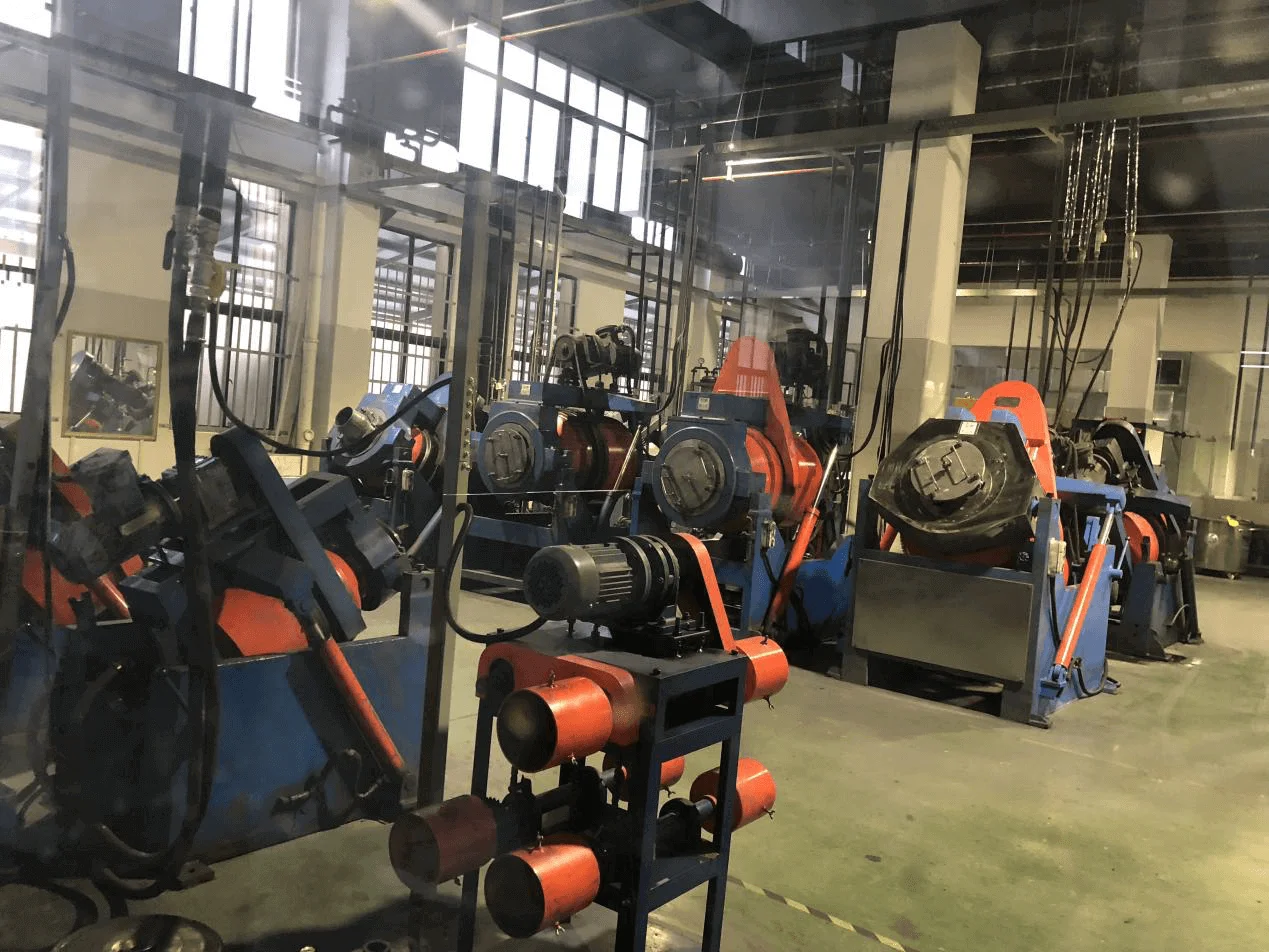
The ball grinding mill can make all fine and ultra-fine grain size powder uniform.
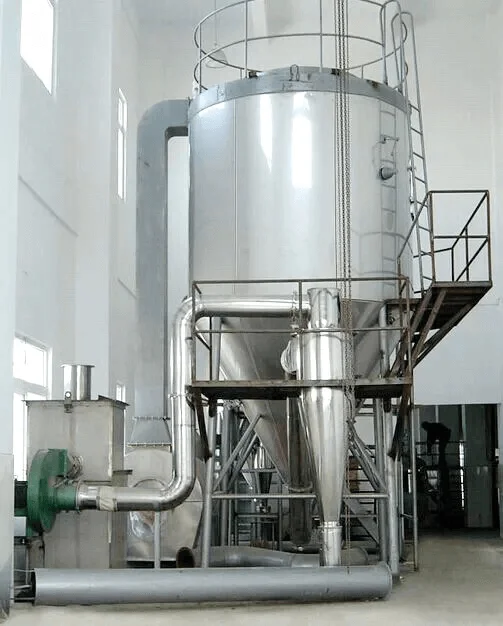
We use spraying prilling tower to ensure the purity of the material.
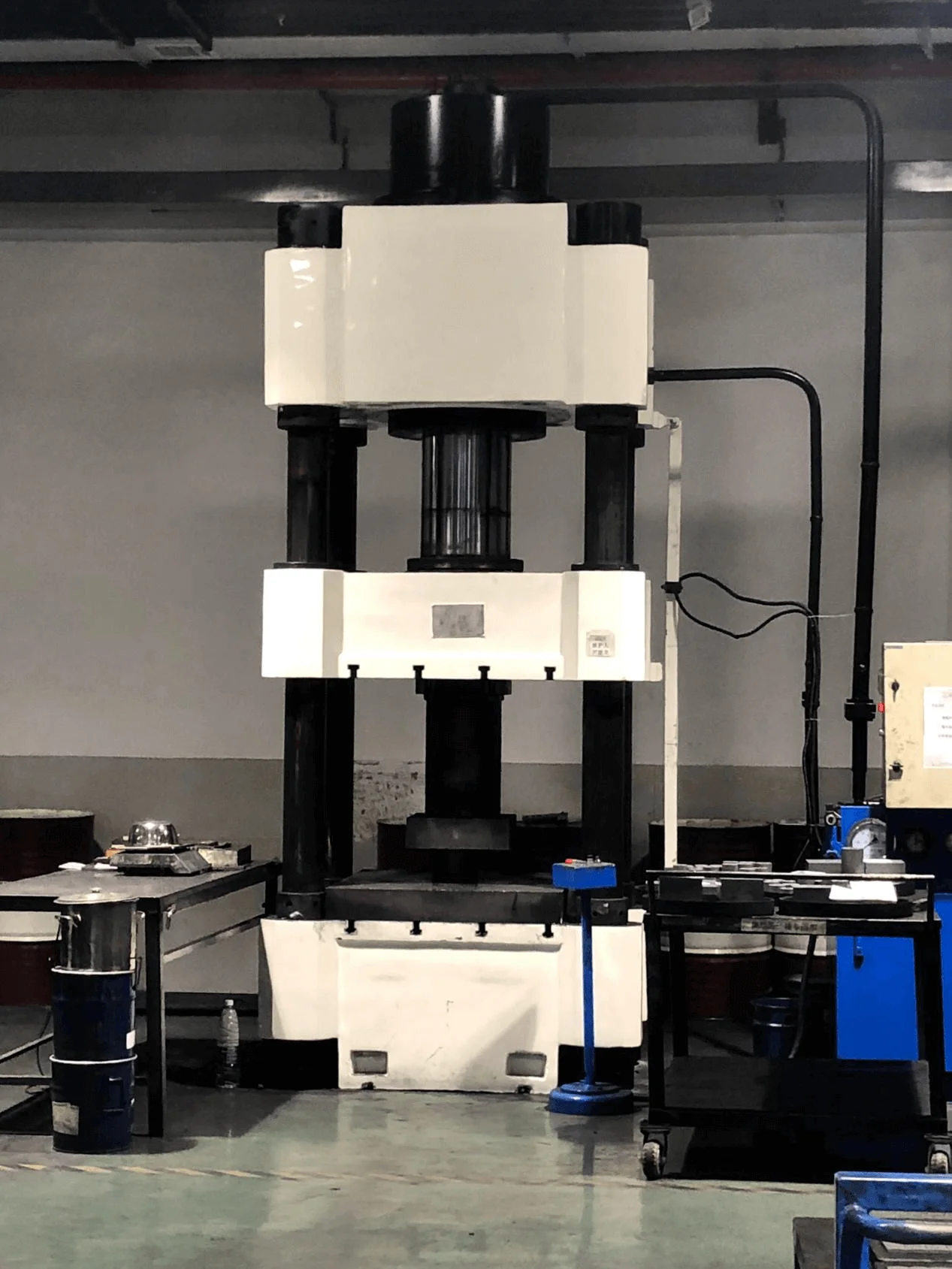
The carbide rods blanks are pressed by the pressing machine to a uniform density and no defect.
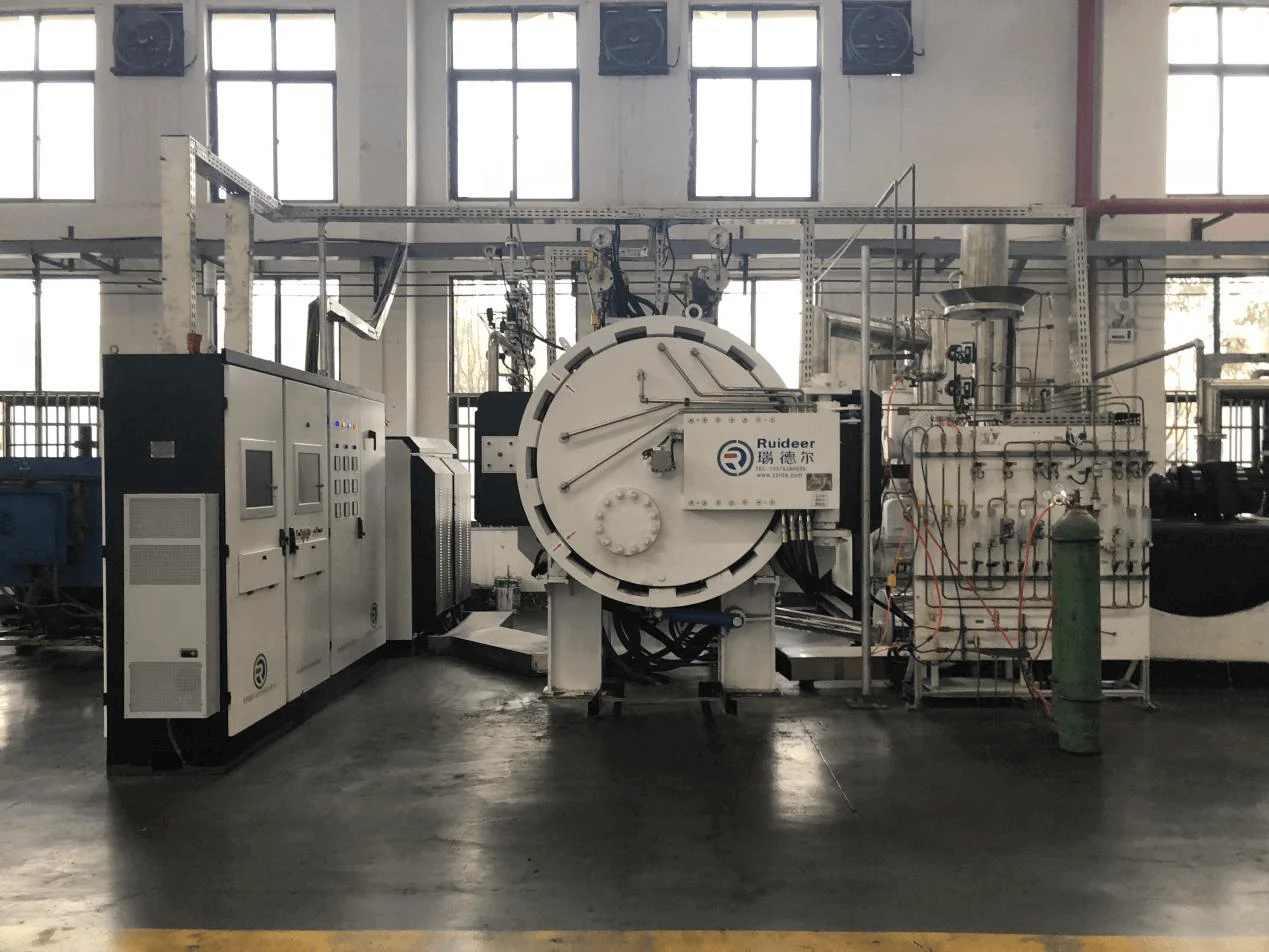
The pressure sintering furnace is applied to provide more pressure during the sintering process in order to obtain a denser structure.

We use advanced grinding machine to grind the carbide rods as customers’ requirements.
Resource
Tungsten steel rods are widely used as materials, such as milling cutters, planers, drills, boring cutters, etc., for cutting cast iron, non-ferrous metals, plastics, chemical fibers, graphite, glass, stone and ordinary steel, and can also be used for cutting Heat-resistant steel, stainless steel, high manganese steel, tool steel and other difficult-to-process materials. Tungsten steel can also be used to make rock drilling tools, mining tools, drilling tools, measuring tools, wear-resistant parts, metal abrasive tools, cylinder linings, precision bearings, nozzles, etc.
Features of tungsten steel round bar:
- Use high-quality ultra-fine tungsten carbide and imported cobalt powder as raw materials.
- It has high strength and high hardness.
- It has excellent red hardness, good wear resistance, high elastic modulus, high bending strength, good chemical stability (acid, alkali, high-temperature oxidation), good impact resistance, low expansion coefficient, thermal conductivity, electrical conductivity and Feature similar to iron and its alloys.
- High-tech precision advanced equipment: 10MPa low pressure sintering furnace imported from Germany for sintering.
- Unique new technology: vacuum high temperature and high pressure sintering. The product adopts pressure sintering in the final stage, which greatly reduces the porosity, improves the compactness, and greatly improves the mechanical properties of the product.
- Product features: There are many material grades, which can be applied to the needs of different uses; the specifications are complete, and the blank size is accurate (reduce the processing volume and improve the production efficiency).
Which occasions are cemented carbide rods suitable for?
The main uses of cemented carbide bars are:
- Cemented carbide bars are suitable for micro-drilling.
- Cemented carbide bars have good wear resistance and bending resistance. They are mainly used to produce extruded bars, suitable for general drills, knives and other wear-resistant parts.
- Cemented carbide bars have good wear resistance and bending resistance. They are mainly used to produce extruded bars, making small-diameter micro-drills, cutting tools for watch processing, integral reamers, and other cutting tools and wear-resistant parts.
- The cemented carbide rod is an ultra-fine particle tungsten steel material. This tungsten steel rod has the characteristics of high hardness, good bending strength, wear resistance, not easy to collapse, and not easy to break. It is a special material for micro drills, widely used in tungsten steel milling cutters, engraving knives and wear-resistant parts.
How to cut tungsten carbide rods?
Tungsten carbide rod is a material with high hardness, which is difficult to achieve by other mechanical processing methods. Wire cutting is more suitable, but due to the unevenness of the “internal energy” of the cemented carbide, especially large cemented carbide, It is easy to produce cracks during processing. So how to avoid this situation?
- From the perspective of producing tungsten carbide blanks, when sintering large cemented carbides and subsequently performing wire-cutting of carbide blanks, the heating and cooling rates should be slowed down and extended as far as possible within the permitted technical range High temperature holding time;
- From the perspective of the processor, it is recommended to allow the Tungsten Carbide Rods to age naturally in the open air or indoor floors for a period of time. It is recommended to avoid using sintered materials for 1 to 2 months. Conditional units can also perform cold treatment on cemented carbide (0 ℃ ~ 10 ℃);
- Before machining, it is necessary to rough grind the cemented carbide, and then cut it for a few days; if it can be rough ground before natural aging, it is more stable.
- In short, the main point is to release the internal energy [stress] of the cemented carbide as far as possible to the minimum to prevent it from forming a destructive force.
Wire cutting hard alloy molybdenum wire is easy to break
- Regarding the problem of wire cutting and cutting of hard alloy molybdenum wires, we need to start with adjusting various parameters of wire cutting machine tools.
- Replace with new guide wheels and conductive blocks;
- Replace the wire cutting fluid with new ones. When wire cutting Carbide Rods, there are too many electro-corrosives. It is easy to reduce the chip removal effect of the wire cutting fluid. You can replace the wire cutting fluid with a new one in advance and improve it appropriately. The proportioning concentration of wire cutting fluid. In addition, it is also possible to choose a water-based cutting fluid such as a wire cutting working fluid with good chip removal performance;
- The machine parameters should be stable, the wire cutting molybdenum wire should not be too tight, and the wire rack should not be too high! The speed cannot be too fast. If it is hl, the frequency conversion of the system must be stable! In terms of current, keep 2.5A. Be careful not to exceed 3A. Amplify the pulse width and pulse width.
What products are carbide rods mainly used for?
Carbide rods are mainly suitable for drills, end mills, and reamers. It can also be used for cutting, punching and measuring tools. It is used in the paper, packaging, printing, and non-ferrous metal processing industries.
In addition, it is also widely used for processing high-speed steel tools, carbide milling cutters, carbide cutters, NAS cutting tools, aviation tools, carbide drills, milling cores, high-speed steel, tapered milling cutters, metric Milling cutters, miniature end mills, ream pilots, electronic cutters, step drills, metal cutting saws, double guarantee gold drills, gun rods, angle cutters, carbide burrs, carbide cutters, etc.
Latest blog